


School principals are responsible for managing teachers and keeping schools operating efficiently, making them key players in ensuring positive student outcomes. But the financial rewards of the job vary widely based on the place of employment. In some states, principal pay stretches further after accounting for cost of living, while in others, higher nominal salaries may fail to translate into greater purchasing power.
SmartAsset evaluated median earnings for K-12 education administrators — broadly including principals, assistant principals and other school administrators — in all 50 states. Earnings were adjusted for regional price differences to allow comparisons across states. The results highlight where principals’ earnings provide the greatest purchasing power.
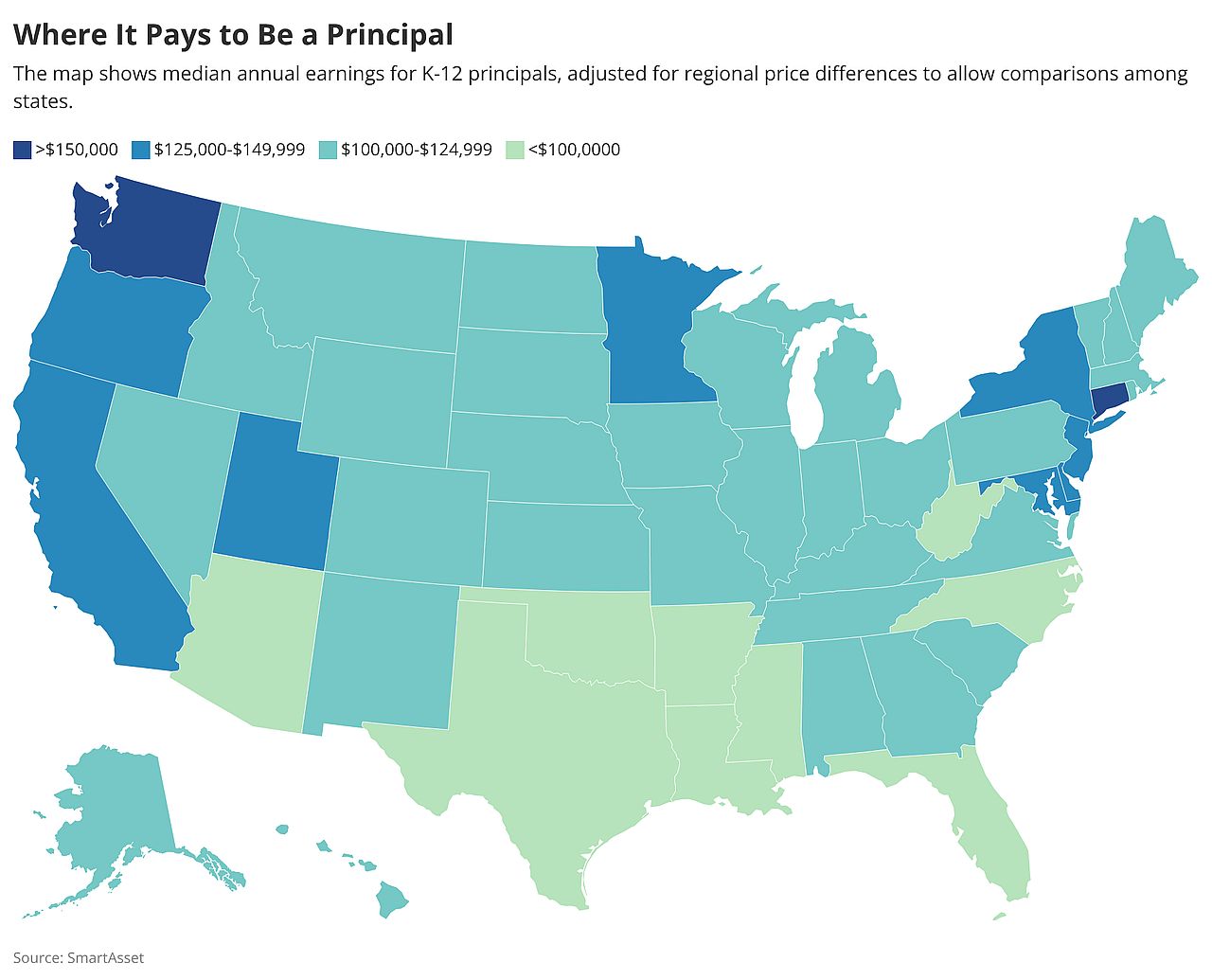
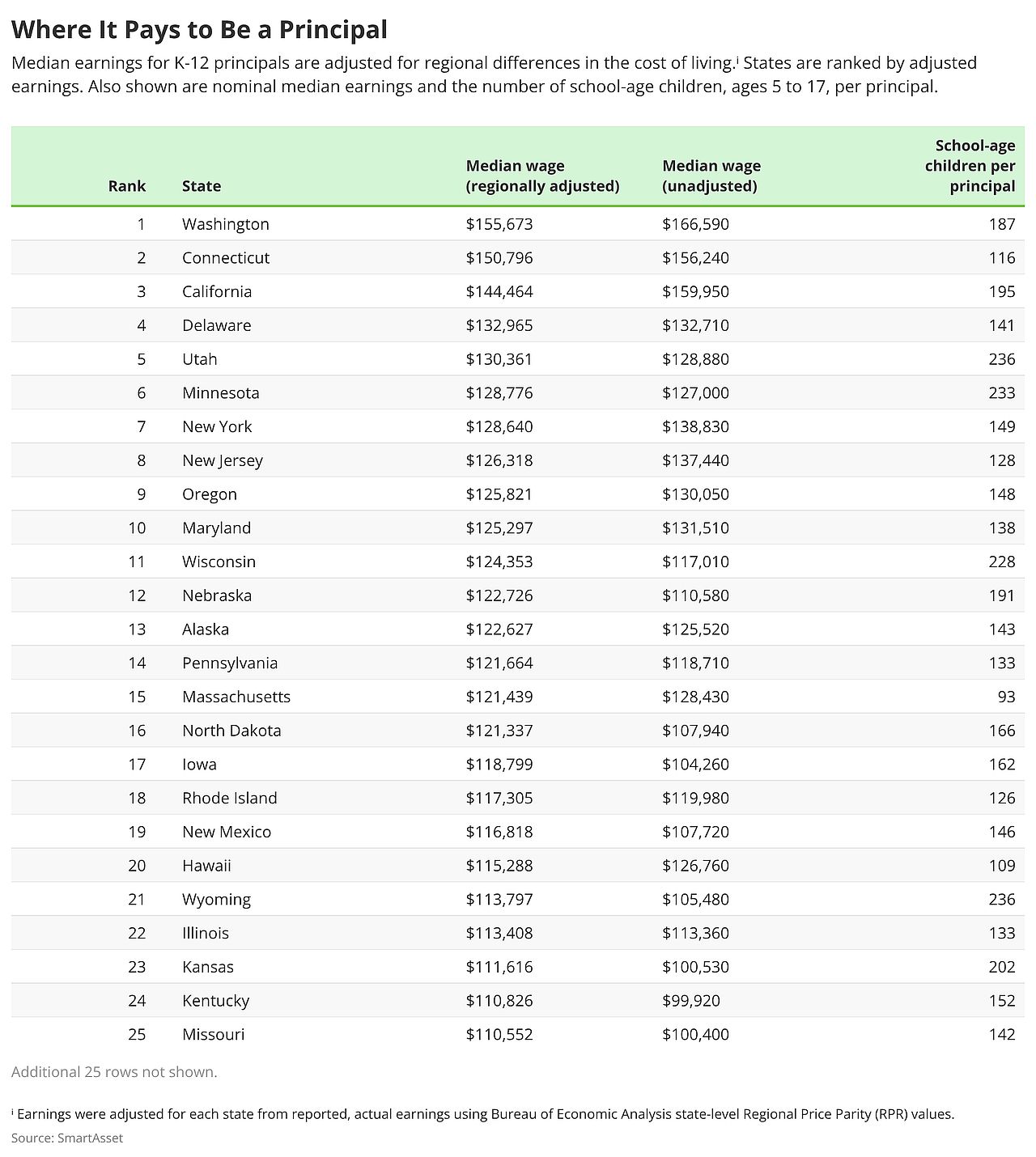
U.S. Bureau of Labor Statistics (BLS) occupational wage data for May 2025, the most recent period available, was analyzed for principals (“Education Administrators, Kindergarten through Secondary”) in each of the 50 states. Annual median earnings were adjusted for regional price parity (RPP) using 2024 U.S. Bureau of Economic Analysis RPP values to express earnings in real, nationally comparable dollars. The number of school age children per administrator was calculated by dividing the population of 5-17 year-olds, as reported by the U.S. Census Bureau’s Population Estimates Program for 2025, by the total number of administrators reported by the BLS in each state. Because BLS occupation 11-9032 includes principals, assistant principals and other K-12 education administrators, the child-to-administrator measure should be interpreted as a statewide population-to-employment ratio rather than a direct measure of school staffing levels. BLS state-level occupational wage estimates are themselves derived from sample survey data and carry sampling error that varies by state, generally increasing as state population and occupation employment counts decrease; figures for lower-population states should be treated as less statistically stable than figures for larger states. Source data providers are not affiliated with, and do not endorse or sponsor, this study or its findings.
This story was produced by SmartAsset and reviewed and distributed by Stacker.


